
A tale of two brothers
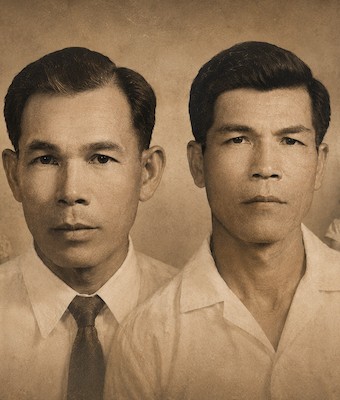
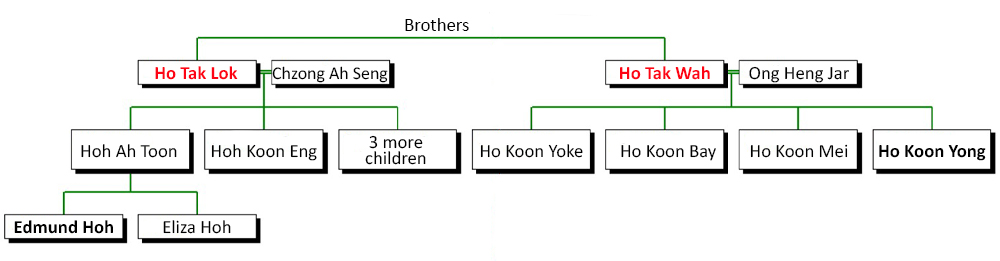
This story follows two brothers, Ho Tak Lok and Ho Tak Wah, who came to Christmas Island from Hainan Island in 1940. Their lives are remembered through the memories of their descendants, Edmund Hoh (grandson of Ho Tak Lok) and Ho Koon Yong (daughter of Ho Tak Wah). These recollections include wartime courage, an arranged marriage, and the worries of aging on a remote island. They show the resilience and enduring bonds that shaped their lives and, after decades apart, brought the families back together.
The story of Ho Tak Lok as told by his grandson Edmund Hoh
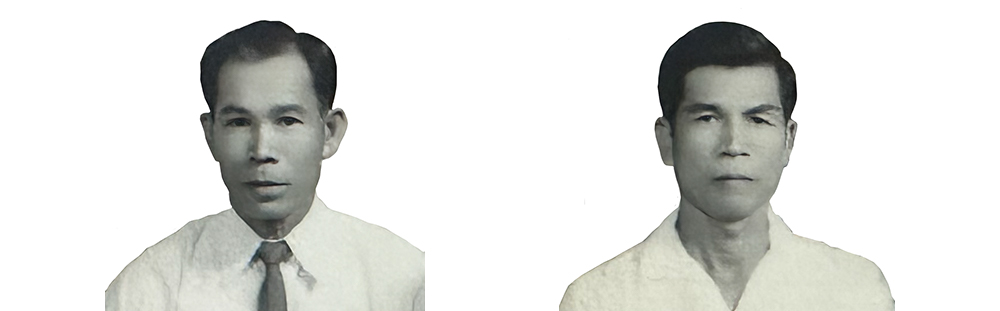
My grandfather Ho Tak/Tat Lok 何達祿 and his brother Ho Tak Wah 何達和 (various English transliterations), were working for the British Phosphate Commission in the pre-war to post war years on Christmas Island.
My grandfather was the middle of three brothers that set sail from Hainan Island. The eldest brother stopped at Seremban, Malaysia and established himself there. My grandfather and his younger brother made their way to Singapore and would have likely responded to a call for workers to work at the British Phosphate Commission on Christmas Island. This would have been in the pre-war era.
According to my late father Hoh Ah Toon, my grandfather, was a machine operator - the ones that would operate, supervise and maintain that heavy machinery such as pumps and factory production machines. Hence, he lived and worked at Grants Well pumping station, which pumped water to the main settlement every day.
[A further explanation follows, after Edmund went to Singapore and found more family documents.]
Also, just to clarify, we do believe our grandfather was an engine driver, in a sense, like a technician of today. He basically looked after factory machines and was certified to do so within his own rank. Interestingly, he worked for Lee Rubber Co in Singapore in the 1930s prior to leaving for Christmas Island.
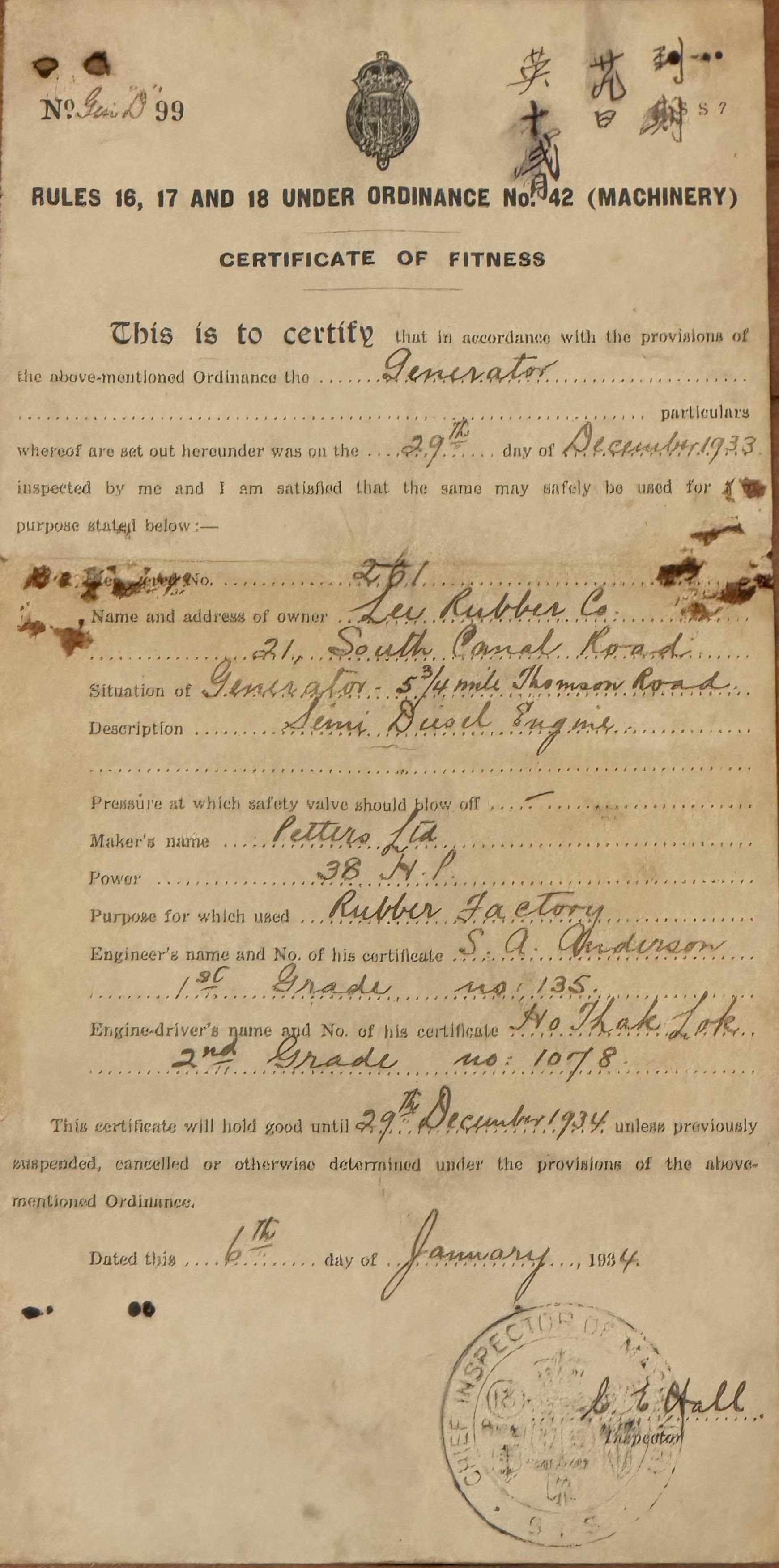
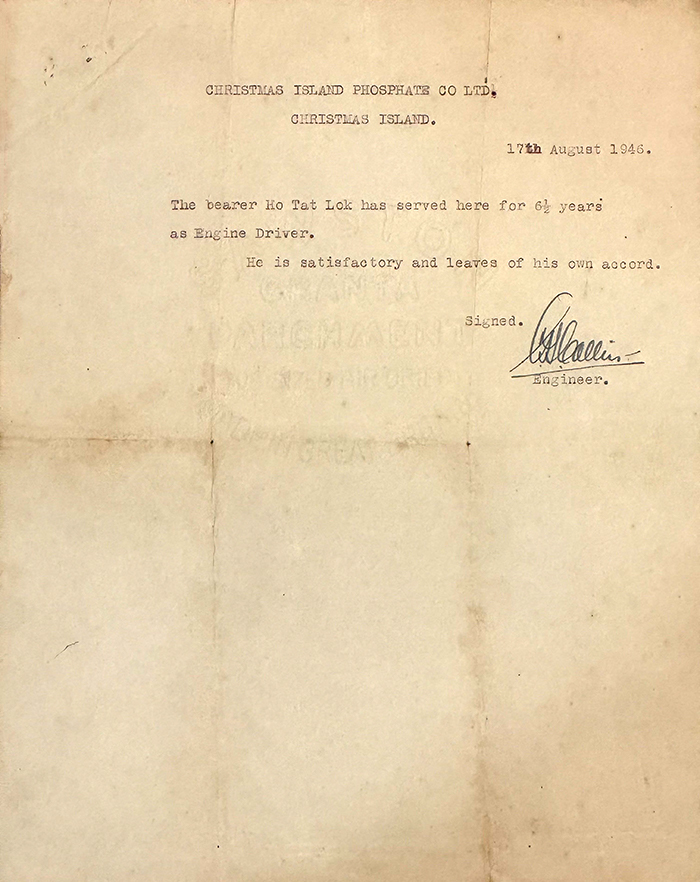
This letter of employment shows that Edmund’s grandfather arrived on Christmas Island in February 1940.
My late father was born on Christmas Island in 1943 during the war, as is my eldest auntie Hoh Koon Eng, in 1945. Not too long after the war, my grandfather decided to relocate the family to Singapore in 1947. His brother, Ho Tak Wah (my grand uncle) remained on Christmas Island. I was born and raised in Singapore but have migrated to Melbourne and have remained since.
Accounts of the Japanese occupation
According to my late father, the POWs - used to "proper" commercially produced meat such as beef, chicken and the like - were initially horrified at having to consume game meat (much to the amusement of my grandparents). But eventually hunger got the better of them, and they ate what was offered anyway. Hence, Cromwell's tongue-in-cheek statement in the letter about having meals prepared from fish, turtle, and pigeons!
No doubt my grandparents took great risks to feed the POWs, as the Japanese military were known to mete out the harshest punishment to those that were caught aiding the POWs. My late grandmother recalled that the Japanese would come around occasionally, and my grandparents had to offer them food as well, so as to placate them.
The letter below was found in the 1990s when my grandmother was clearing out old documents from her flat. The letter of recommendation was written by Tom Pearson Cromwell for my late grandfather who was trying to return to Christmas Island (albeit unsuccessfully) to seek employment in the Phosphate Commission. Cromwell was the District Officer on Christmas Island up until the Japanese invasion.
I believe the letter is an important piece of document as a testament the help that Cromwell and the other European POWs received from the local Islanders during the Japanese occupation of Christmas Island.
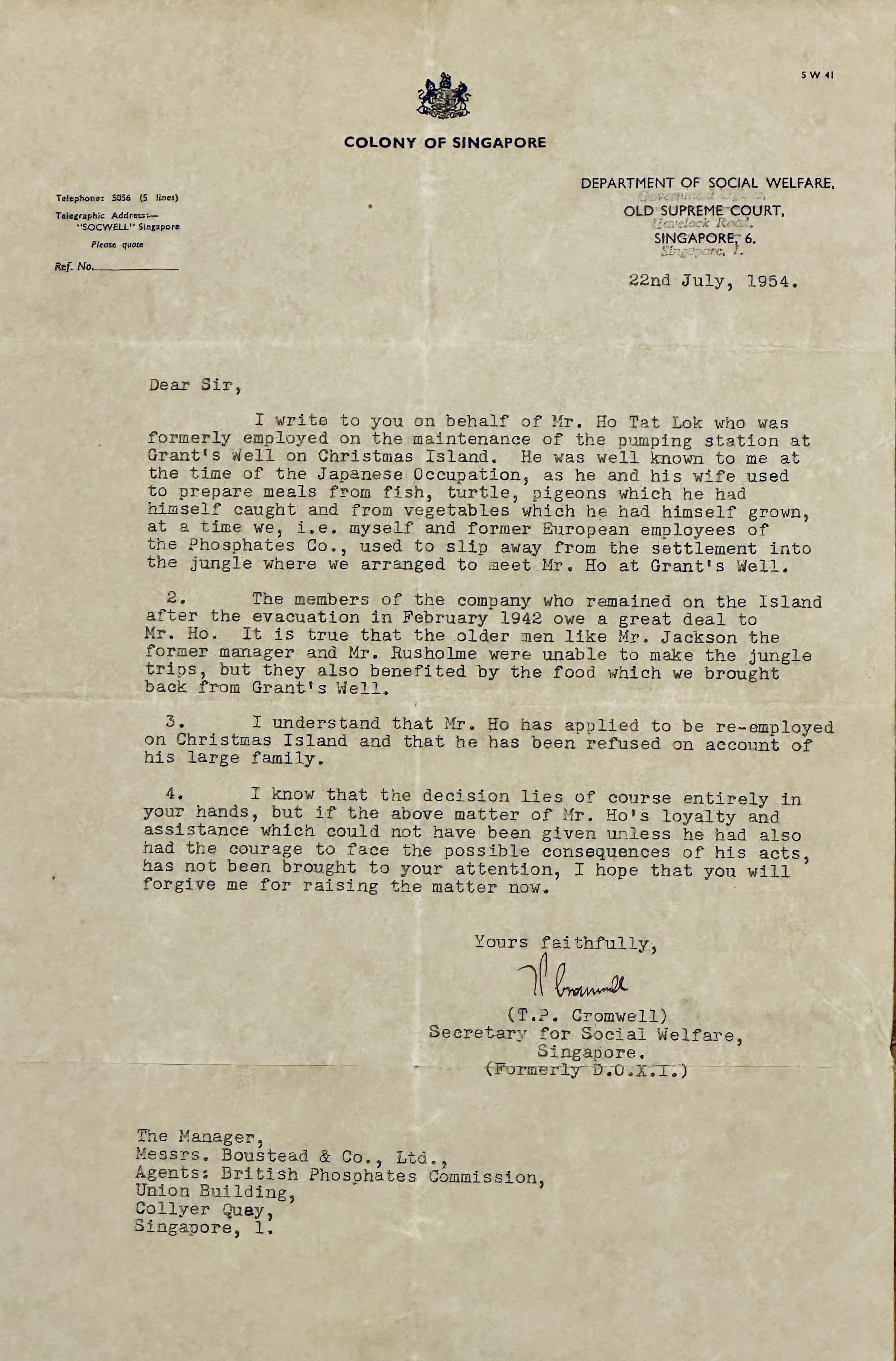
Tom Cromwell Letter
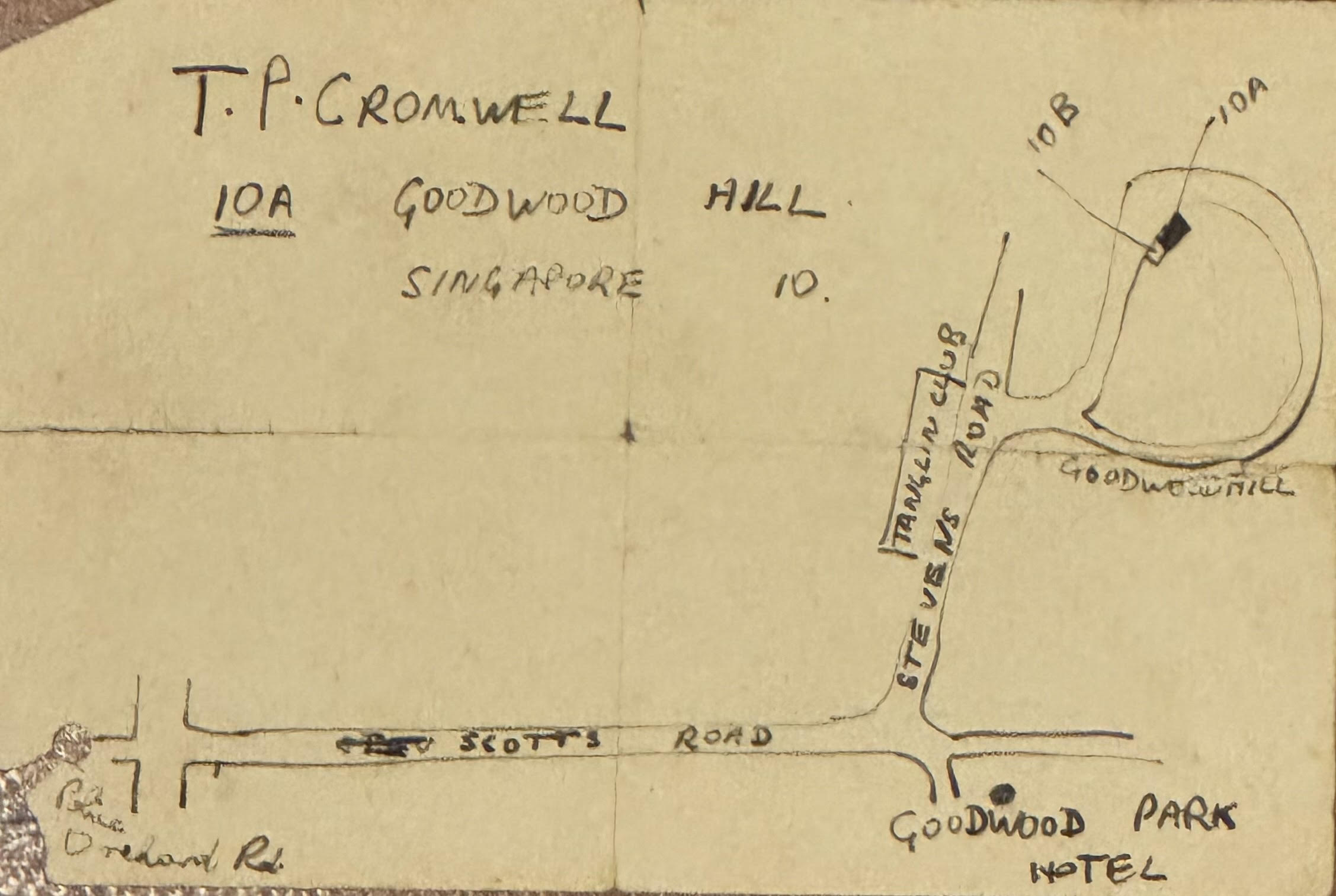
Directions given to Hoh Tak Lok for visiting Tom Cromwell’s address
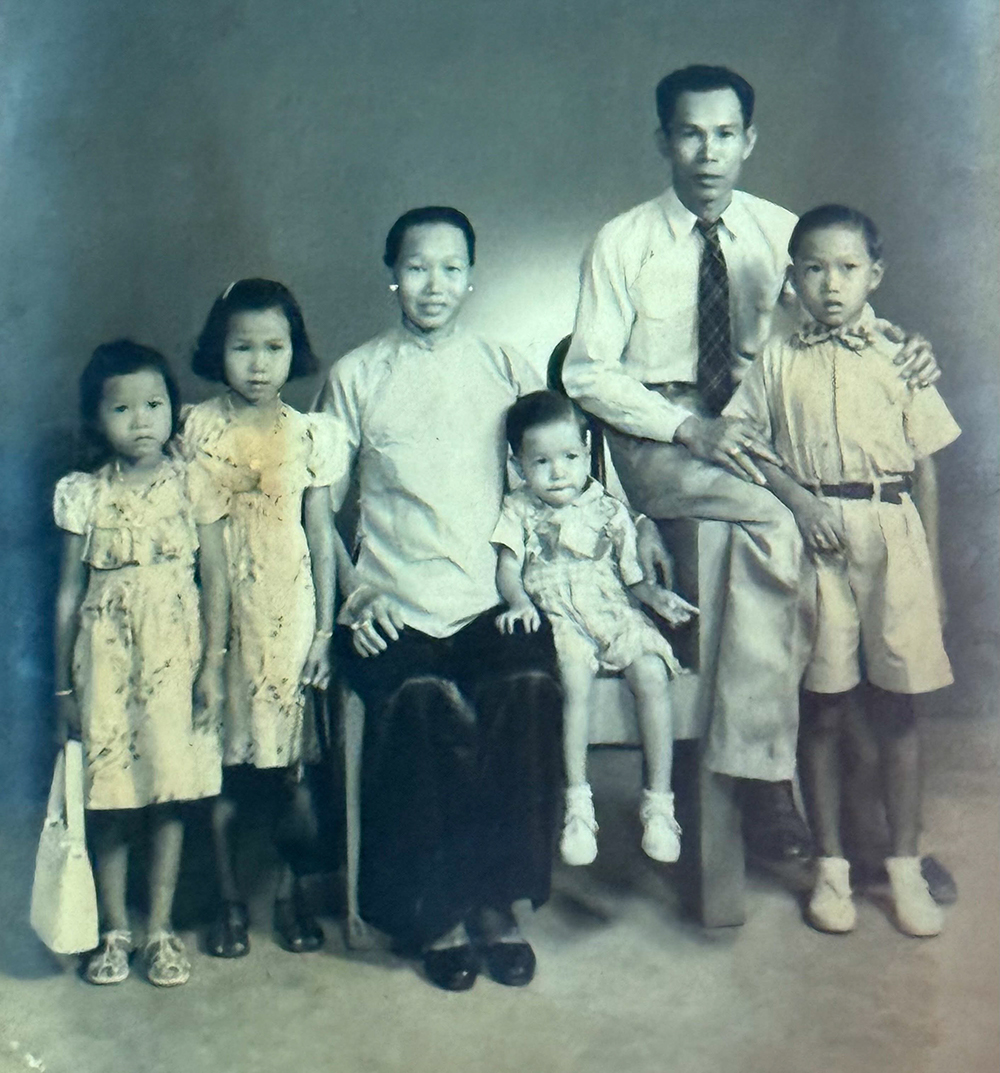
Family portrait was taken in the early 1950s. Hoh Tak Lok (father) & Chzong Ah Seng (mother).
Both Hoh Koon Eng (eldest daughter) and Hoh Ah Toon (eldest son) were born on Christmas Island.
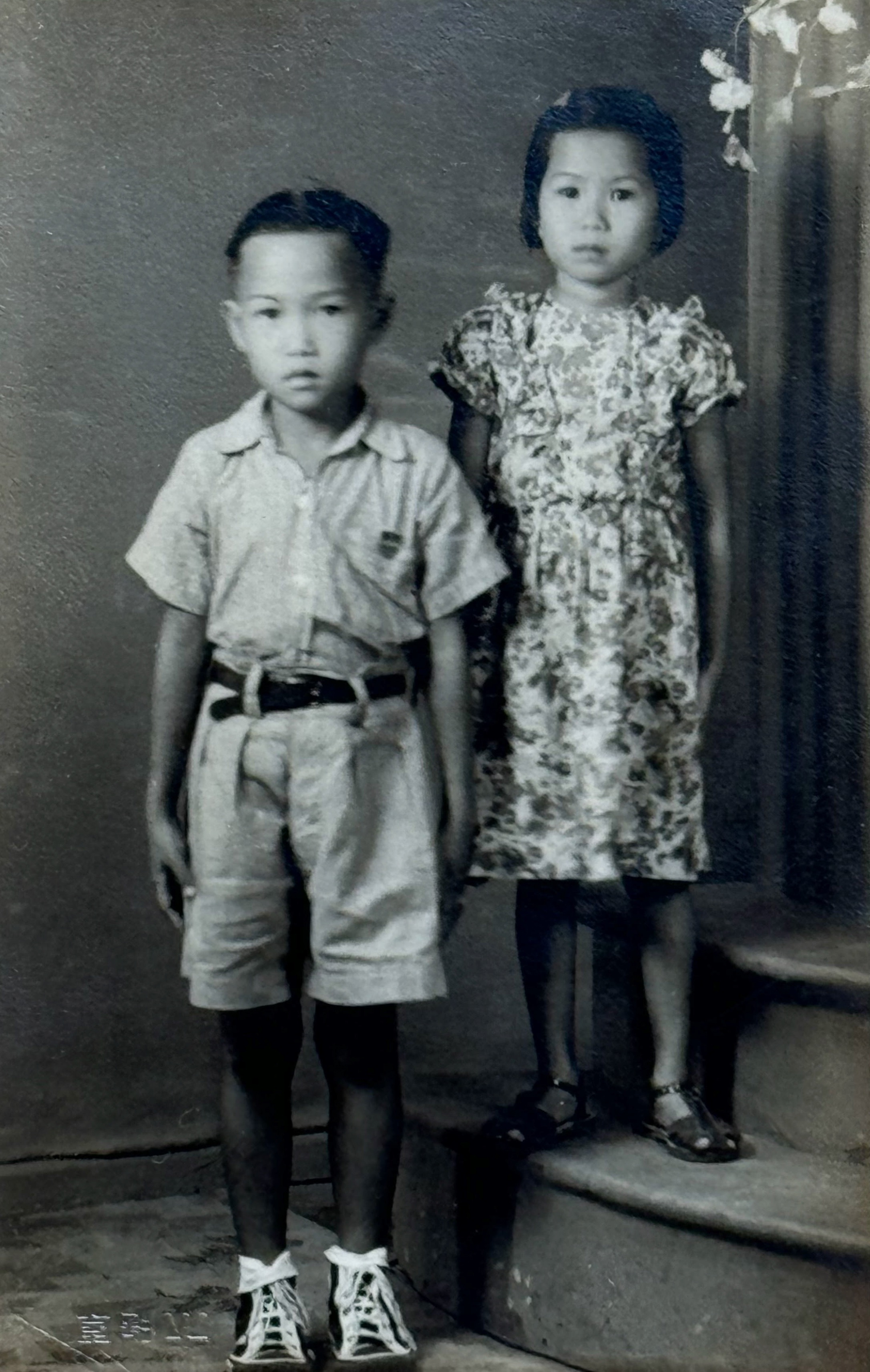
Father and Aunty of Edmund Hoh. Their birth certificates from a 1946 document show that Hoh Ah Toon (left) was born at Settlement Hospital on 14th July 1943 and Hoh Koon Eng (right) was born 19th June 1945 at Grant’s Well. Their father’s occupation was “engine driver” and mother “housewife”; both from China.
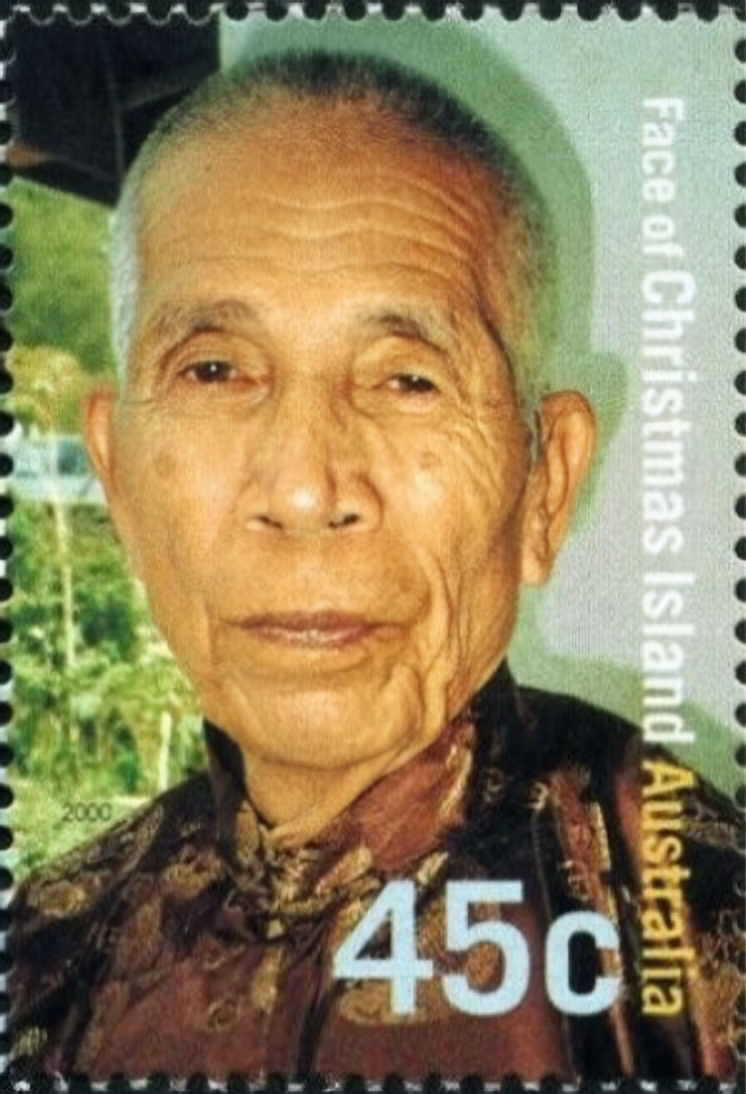
My late grand uncle remained on Christmas Island and lived up to his 90s, passing on only around 2011. He was featured in the Australia Post Millennium celebration stamps in 2000 as he was the oldest Christmas Islander alive back then.
The story continues through the memories of Ho Koon Yong (Edmund’s aunty), who shares in an interview the life of her father, Ho Tak Wah, the brother of Ho Tak Lok.
Interviewer: Julie Figliomeni
Interviewee: Ho Koon Yong
Date: 14th May 2025
Editorial note: Brackets [ … ] provide context or clarification and are not part of the speaker’s words.
Julie: Hello, Koon Yong, thanks for meeting with me today to talk about your father (Ho Tak Wah). We already have the story of your uncle Ho Tak Lok, and we’re wondering if you can share a bit more information perhaps, about your father. So, would you like to tell us when he came to Christmas Island?
Koon Yong: Hello, Julie, thanks for inviting me to CI Stories telling my father’s story. I’m not very sure when; he didn’t tell me or my siblings, when he came to the island. He said he came to the Island before World War Two and before the Japanese occupation. He was here with his brother. He worked at the power station, while his brother worked at Grant’s Well, looking after the power pump and the engines.
When the war started, my uncle, still at Grant’s Well was looking after the power station, the pumps, water pump, and my father was still looking after the power station, which was the old power station. They have since been demolished.
Julie: And where was the old power station?
Koon Yong: At Settlement. You can see a big platform of concrete; the building has all been removed. Only a big platform left; opposite the barracks; opposite the cop shop.
Julie: Okay, so that’s where it was. Does your father say anything about what it was like during the war, whether he had to appease, look after the Japanese or anything like that, or look after the local people? Or was it the same as normal?
Koon Yong: Normal. They [the Japanese] normal. They were not there at all, just normal only then you see them. You need to greet them, yes, otherwise you get a spank on your hand.
Julie: Did your father ever get caned?
Koon Yong: Yeah, it happened to him one day. He didn’t greet the Japanese and got spanked.
Julie: Oh, wow. So, I’m sure after that, he made sure he greeted them.
Koon Yong: Yes, yes. And some Japanese officers, they are very good, very nice. My dad asked one of the officers, I don’t know who; the sergeant? talk to them and say, “Can I have a bicycle?” And then next day, the officer took one bicycle, gave it to my dad.
Julie: Oh, how nice of the officer.
Koon Yong: Oh, it was an old one.
Julie: Did your dad ever talk about those early days about having food? Was it difficult? How did they get their food? I heard stories of people saying that they had to eat pigeon and whatever?
Koon Yong: Oh, yeah, those days, my dad said after work he and a group of friends, went out into the jungle hunting for food. Pigeon, the Imperial pigeon, yeah, the bats for food.
Julie: Do you have any old photos of your dad?
Koon Yong: I don’t have any photos of him, because we are too poor to own a camera and to develop costs money. That’s right. Those days, certainly understand that a lot of people [were the same] I think in those times — that’s why there were no photos back then.
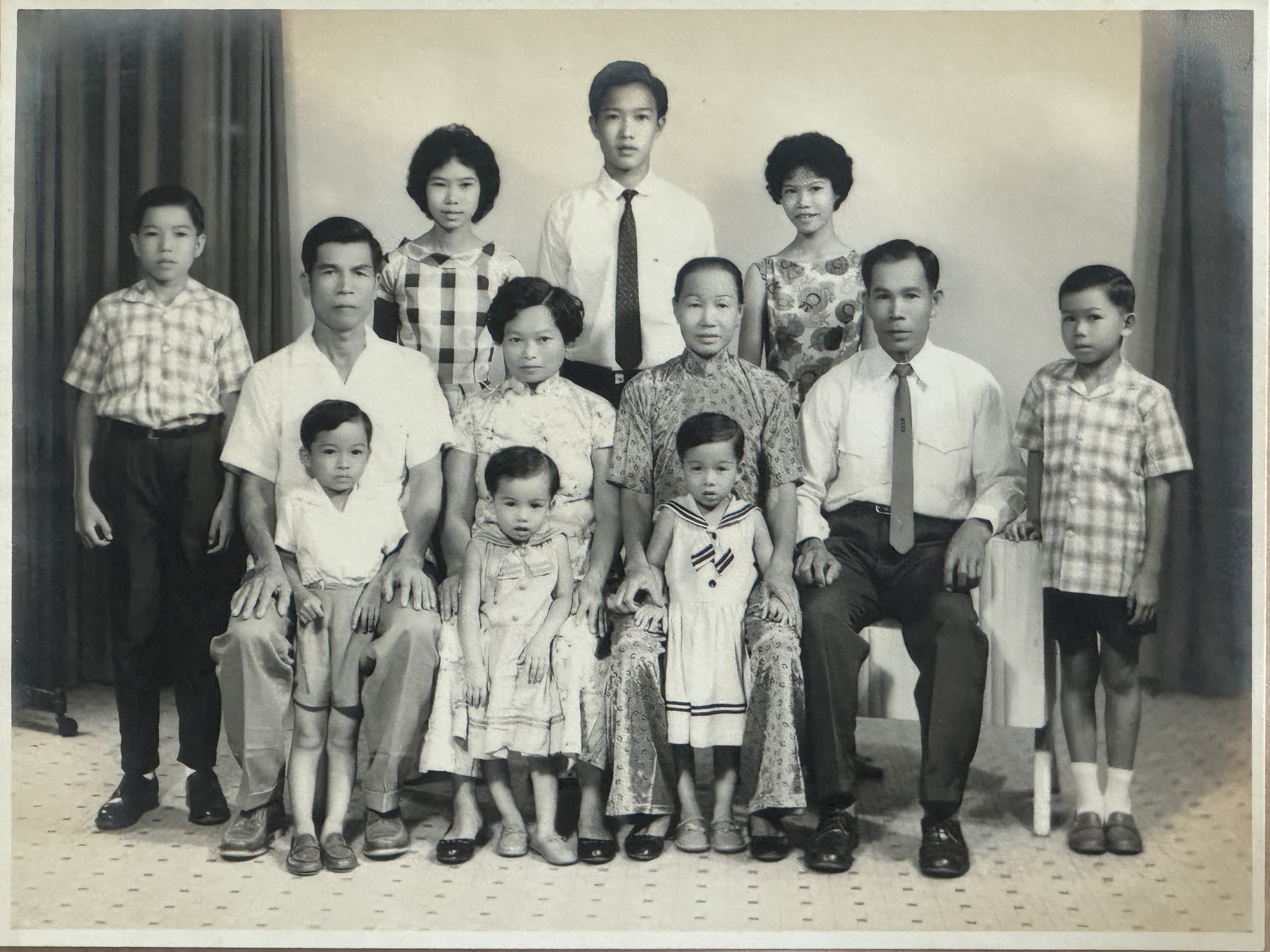
Left to right sitting middle row: Ho Tak Wah, Ong Heng Jar, Chzong Ah Seng, Ho Tak Lok1950s studio photo taken in Singapore
Julie: So did your father tell you any other stories of his experiences on Christmas Island?
Koon Yong: Nothing really as interesting that came to me like the one about greeting the soldier and getting the bicycle.
Julie: Is there anything else, maybe after that period of time?
Koon Yong: Nothing unusual; day in, day out, working as normal, nothing.
Julie: Did your father ever talk about like his journey to Christmas Island? How he came about to come to Christmas Island?
Koon Yong: His brother called him to come to the Island. First of all, he came to the Lee rubber plantation, Singapore. He went there and didn’t like the place and life. So, he came to the Island as a fitter, at the power station and didn’t stay long. He didn’t like the place; too quiet for him. Then he went to Singapore but decided to come back [to the island] again.
After the war my uncle Ho Tak Lok left the Island and went back to Singapore. A few months later my dad joined him. My uncle suggested to my dad “Go get married, settle down”. So, my dad went to China to marry my mum. It was a pre-arranged marriage. When my father was on the ship back to China to marry my mum, he was speaking to a man and his family unaware that these were his future in-laws who were also travelling on the same ship. This was discovered after my mum and dad were married.
Julie: Oh, okay, but he didn’t know at all?
Koon Yong: Father and my grandpa didn’t know at all, until they reached China, then they start to talk about it. Then from that time, my dad got married with my mum and moved to Singapore. My mom wanted to come in [to Christmas Island], but she couldn’t because there’s no married quarters. Yes, only single quarters at that time. So, my dad say, “Stay in Singapore for a while, see how things go”. So, my dad came back to the island again.
Julie: Where was he living at that time on the island?
Koon Yong: In the Settlement. He was never at South Point.
Julie: When did your mum come?
Koon Yong: And then, so later in the year, my mum asked dad and said, “I want to come into Christmas Island”. So, he somehow applied, funny, got her into the island.
Julie: Oh, that’s good. And your mum worked on the island?
Koon Yong: No, raise children as a housewife. Look after the house. Look after him.
Julie: How many brothers and sisters do you have?
Koon Yong: I’ve got one brother and two sisters.
Julie: So, did your uncle leave the island after not long being here? Why did your dad decide to stay? Was it because of work and having family here?
Koon Yong: Yes, he decided he liked it in the end. At the beginning, he didn’t like it, yes. And then, my uncle, why did he decide to leave? Well, he decided … no, not sure. He, during the World War 2, used to feed the British officers in the nighttime. They come out to look for food; they came to my uncle’s garden to look for food. Sweet Potato. Potato. Sweet potato leaf. All those foods and rice as well. And then in the daytime, the British officers, they went into hiding. [By this time, there were no longer British officers present. Only European prisoners of war.]
Julie: So, he was helping the British officers. Wow. And your dad, at one time, he was the oldest man living on the island, and he was on a stamp? Did he have any thoughts about that? Did he say anything about having his picture on the stamp, how it made him feel, or what he thought about it?
Koon Yong: No, he didn’t express but I can see his face, smiling, happy, wearing that type of typical Chinese dress shirt. Probably he felt very proud.
So yeah, that’s good. Even after retirement, dad still decided to stay on the island. He didn’t have any thoughts of wanting to live anywhere else or go anywhere else because he doesn’t speak other languages like English, only Hainanese and Cantonese; only these few languages. Apart from them he cannot converse with other people. He couldn’t move on to mainland.
When he was 99 in 2011, he was asked to leave the island to go to a nursing home [in Perth]. And then we told the Director of Nurses, he doesn’t like to go to nursing home at all. Be better off here, because nursing home, there’s so many foreign people. He doesn’t know how to converse, how to talk; he’d be lost. And we told the Director that during his annual holiday [in Perth] he kept asking if today we would take off [on the plane]. The next day he said, “Are we going back to Christmas Island tomorrow?” Nagging, nagging. He doesn’t want to be in Perth he doesn’t want to stay. Yeah, he misses Christmas Island.
Julie: Oh, that’s lovely. And so how old was he when he passed?
Koon Yong: According to his passport, he has a fake year of birth. But I found out his documentation reference saying that he was born 1912 so when he passed away, he was 99, years of age.
Julie: Oh, my goodness. And so why do you think the passport document was not the same as his original documents?
Koon Yong: The reason was that in those times, if you’re old, you cannot come to the island to work. So, he said he was younger than he was. Yeah, exactly. Very clever man, but it works differently to my mother. Say she’s younger, she cannot come in at all. She’s too young to come in. You say she’s old, “Oh, she’s nearly in the 40s.” You need to have family, yeah. Otherwise, they come in make babies, so they let her in. That was the reason. Very political.
Julie: I have heard quite a few stories about people changing their age, particularly when they didn’t want to go to war, or they did want to go to war, and they changed their age.
Koon Yong: So that’s correct. We don’t have birth certificate; you cannot trace it.
Julie: And now everything is documented.
Koon Yong: Yes, of course.
Julie: Well, thank you for sharing your dad’s stories. Very interesting. And he was a lovely man. From what I know, he was always lovely. And I still remember the funeral. They drove past the school. It was very moving. So yes, he’s definitely one of the legends, of the island, forever remembered. So, thank you for sharing.
Koon Yong: Thank you.
Julie: You’re welcome. Thank you.
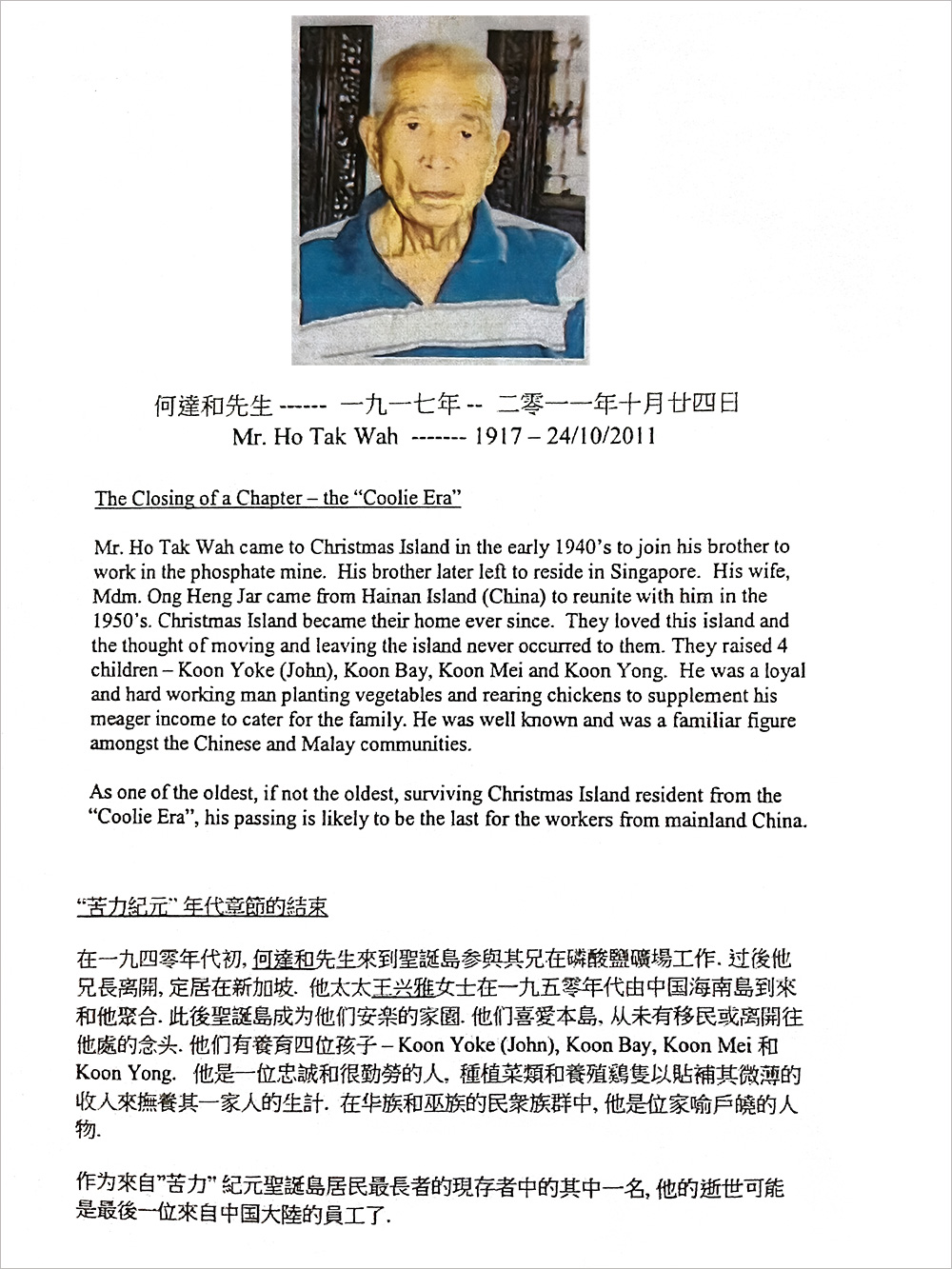
Memorial tribute for the funeral of Mr Ho Tak Wah
Koon Yong: Also, my mother’s name is ONG Heng Jar. Sorry, I don’t know what year my parents got married.
All my siblings were born on Christmas Island and grew up at the Settlement; firstly was at the so-called “40 Houses” near the Police Station then moved to the houses also, in the Settlement, near the old power station.
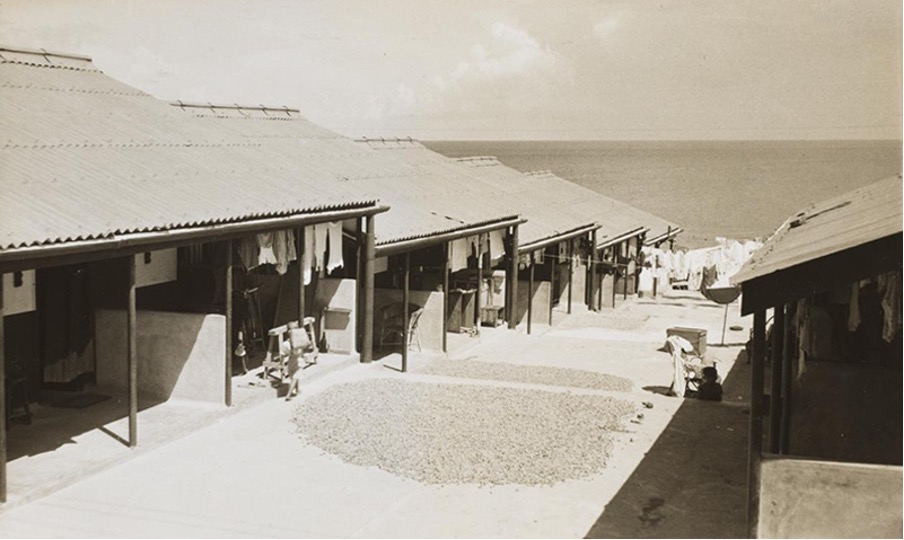
40 Houses, formerly located on the site of the Police Padang beside the Police Station, now demolished. The name derives from their layout in four blocks of ten units.
My siblings are now living in Perth.
Footnote:
Edmund had lost contact with Koon Yong’s side of the family. After more than forty years, Christmas Island Stories helped reconnect the families, leading to a joyful reunion in Perth at Christmas 2025.
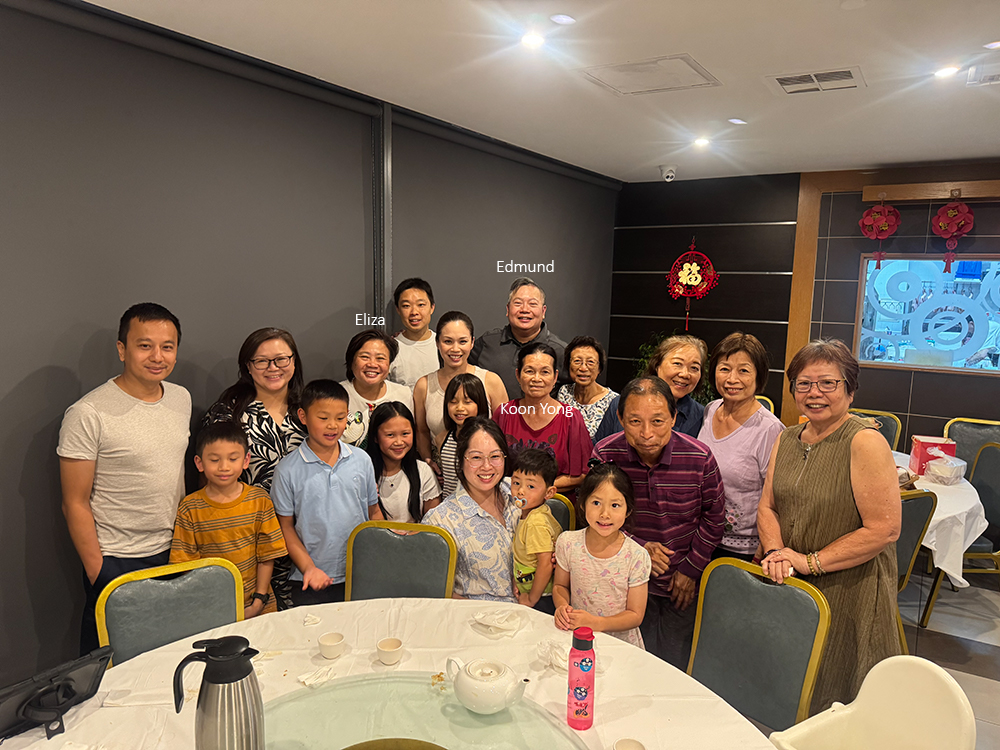
Edmund (Melbourne), his sister Eliza (Singapore), Koon Yong (Christmas Island), and extended family, reunited in Perth.